
How Loughburians are helping shape the future of motorsport
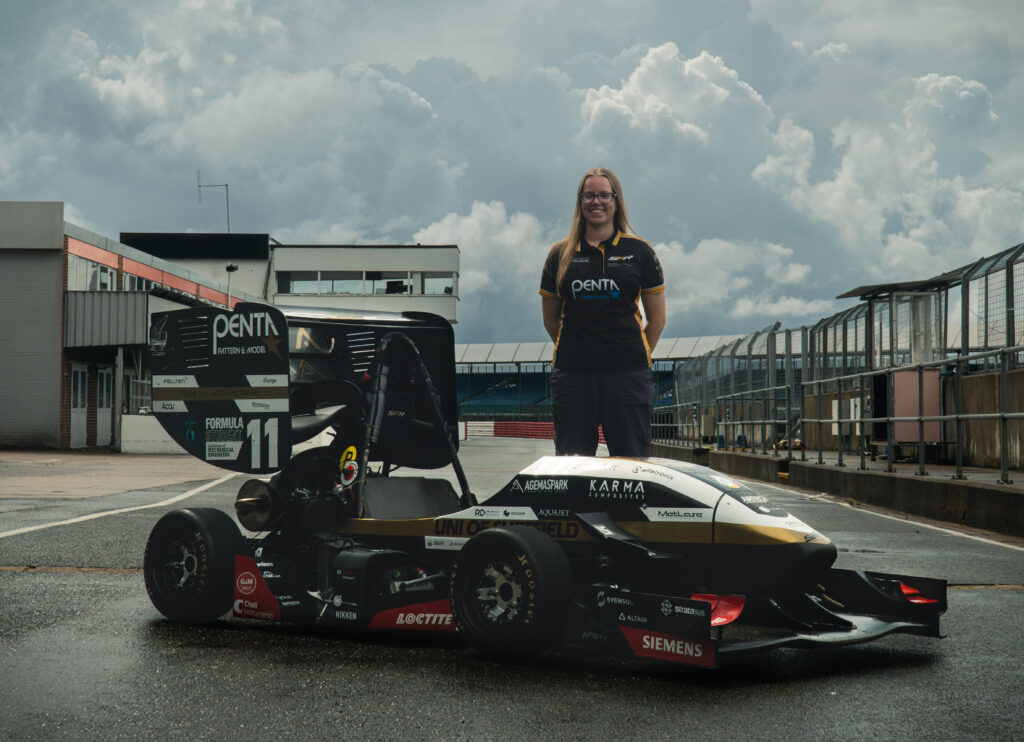
Grace Blain (LHS 2023)
3rd Year Mechanical Engineering Student at University of Sheffield and former Chassis & Driver Environment Lead at Sheffield Formula Racing
What first sparked your interest in engineering, technology and motorsport?
I think this is twofold, my interest in STEM and motorsport actually grew separately before I realised that I could combine them! I’ve loved motorsport since my dad introduced it to me aged 3. He also took me a couple of times to the Donington Park Museum, which is sadly not there anymore, and I remember seeing an old F1 car painted in a pressure map, and thinking it was fascinating. Years later, I went on a trip with the High School to Loughborough Uni, and they had the very same car in their atrium, which they’d got when the museum closed. It was at that point that it clicked that maths, which I’ve always loved, and F1, could be combined into an actual career!
What drew you to study mechanical engineering at university?
When I knew I wanted to work in motorsport, in something maths related, engineering was the obvious choice. I looked at different courses at different open days, and realised that mechanical was one of the most broad disciplines, and also, crucially for me, was very hands on at Sheffield. On top of that Sheffield has an excellent Formula Student team, which I’d heard about at a talk at LGS by alumni Tom Slatter (LGS 1998), who was the team’s Faculty Advisor.
You are involved with your university’s Formula Student racing team. What does that involve and what have you learned from it?
I’m part of, and previously lead, the Chassis and Driver Environment subteam; and my design jobs have included designing a firewall (the bit that goes between the driver and the engine, also acting as a seat), and designing tabs for the headrest to be attached to and their welding jig. I’ve also done a lot of carbon fibre lay up, and bagging, and have spent time teaching that to younger years, passing that knowledge on. I think my favourite bit though has to be helping in the layup of two carbon fibre monocoques; it’s so rewarding when they come back from their final cure and you can see weeks of labour being worth it, and the rest of the team can build and turn it into a car.
How has working on a student racing team helped prepare you for a career in motorsport or engineering?
It’s pretty much the only thing I talk about in interviews, it’s given me so much experience and industry insight. The hands on aspect of the team means you learn things intuitively and see how things work in the real world, not just on slides in lecture theatres. The team has got an incredible alumni network too, we have people in almost every F1 team and they’re all so willing to help you out.
What are your ambitions for the future?
My ambitions for the future have changed over the past year. I’ve realised that the things I enjoyed most about the team are the teaching and helping others, and so I am going to train to teach maths and physics in secondary schools after I graduate next year. This doesn’t take away from the fact I wanted to work in composites in F1 for a number of years, and it would have been an excellent career, just not one that I would like to do personally anymore.
What advice would you give to current students interested in similar degree and career pathways?
My advice would be go for it! It’s not easy, but it’s so rewarding and just as cool as you think it is! Get as much experience for your CV as you can. I thought I knew no one in the industry, but the more you ask around, someone will know someone who knows someone, and suddenly you’re trackside and on the grid at Donington Park. And especially to any girls: there is a place for you. The number of girls in SFR has more than doubled during the time I’ve been on the team, and they’re equally respected and treated, rightly, as peers. Get involved with initiatives like Girls on Track, and there are so many cool opportunities out there.
In one sentence, what makes working in motorsport so exciting?
It’s a fast paced environment right at the cutting edge of automotive technology.
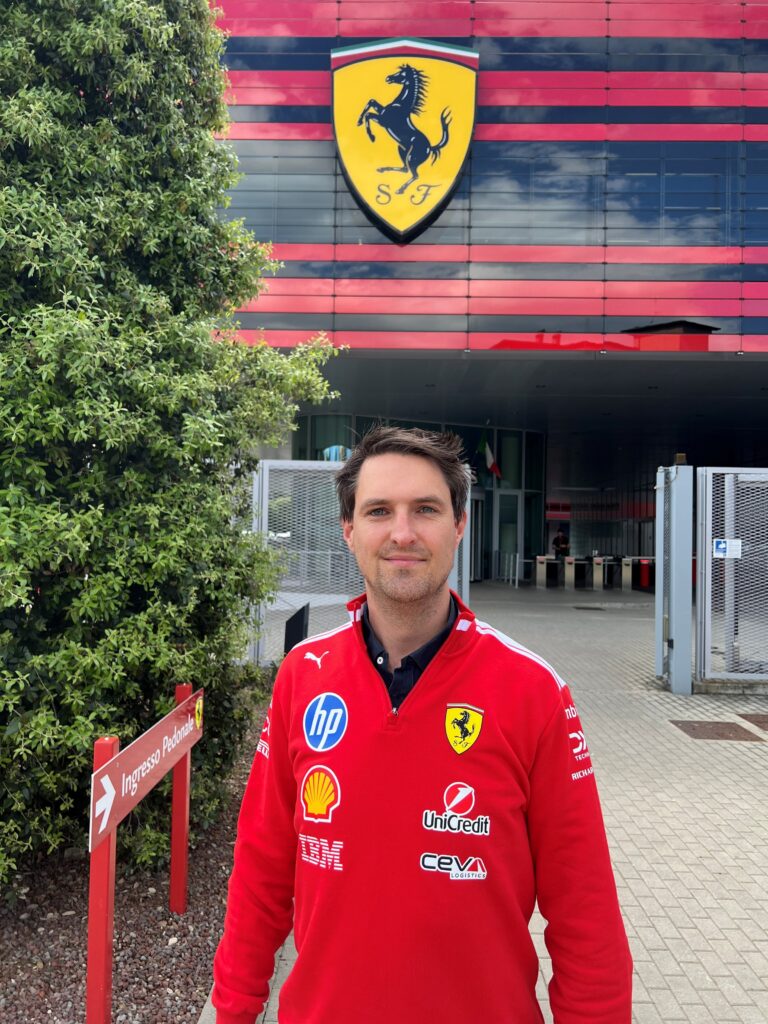
James Hamilton (LGS 2002)
Senior Design Engineer – Ferrari F1
What first sparked your interest in engineering, technology and motorsport?
I developed an interest in engineering from a very young age, but it was my time at LGS that really grew my enthusiasm for it. Having access to the school workshops gave me the opportunity to turn that interest into something practical and hands-on. I quickly became involved in the school karting club and spent many afternoons after school in the workshops, learning to use the equipment and eventually building my own kart.
Can you briefly describe your current role and what a typical design cycle looks like?
I currently work as a Composite Designer for the Scuderia Ferrari Formula 1 team and, after 20 years in motorsport, I am fortunate to lead some of the larger and more technically challenging projects within the design office. I spent six years designing the chassis and have recently transitioned to gearbox design.
My role varies throughout the year and begins at the conceptual phase alongside a small group of engineers and aerodynamicists, where we evaluate different design concepts and vehicle layouts with the aim of maximising both performance and future development potential across the racing season.
As the project develops, the process moves into a more detailed design phase where key areas such as driver fit, fuel cell size, suspension layout and structural integration are finalised. These decisions are often pushed as late as possible in order to extract the maximum performance before releasing the design to production.
Once the design enters production, my role expands into managing a team of designers responsible for detailing the final components. I also work closely with the manufacturing departments within Ferrari to ensure the parts are produced in line with the design intent and to resolve any technical or timing issues that arise during the build process. When the first component is completed, it moves directly to the R&D department for FIA homologation testing. The chassis homologation involves around 20 structural load cases, with loads reaching up to 300kN. Since the chassis and gearbox are designed to be as lightweight as possible, successfully passing these tests is always a significant challenge. As this process takes place only weeks before the first pre-season test — and the car cannot run until homologation is complete — it is one of the most demanding and high-pressure stages of the entire design cycle.
For readers unfamiliar with the sport, how would you explain what your work contributes to a Formula One team or the wider motorsport world?
As a designer, my main contribution to the team is improving on-track performance, car reliability, car legality and more recently cutting cost.
Beyond direct performance, designers can also contribute to the wider motorsport industry through collaboration with the sport’s governing body, the Fédération Internationale de l’Automobile (FIA), particularly in relation to safety development and regulation changes.
What is the most exciting or rewarding part of your work?
One of the most exciting parts of my job is the opportunity to occasionally attend race weekends and visit the team garage at the track. The atmosphere is incredibly intense and energetic — being surrounded by the cars, team personnel, fans, and television crews is a very unique experience.
From an engineering perspective, I enjoy the technical challenge and the freedom to explore new ideas. I feel very fortunate to work alongside extremely talented people, and over the years I have been involved in developing several unique performance-enhancing projects.
Looking back, were there any teachers, subjects or experiences at school that influenced your career path?
Two teachers who certainly played an important role in my early engineering development were Paul O’Connor and Mike Rundel, who managed the school workshops during my time at LGS. The opportunity to spend time there, particularly through the after-school karting club, gave me valuable hands-on experience at a young age and really helped develop my interest in engineering and motorsport.
What skills or qualities are most important for someone hoping to work in this industry?
A practical engineering background is a positive, particularly if you enjoy building, testing, and understanding how things work in the real world. Motorsport is also a competitive environment, so having a strong work ethic, resilience under pressure, and a naturally competitive mindset are all important qualities.
Creativity and “blue-sky thinking” are good qualities for a designer to have as performance often comes from exploring unconventional ideas and challenging established solutions.
What advice would you give to current students interested in similar careers?
Many motorsport teams and suppliers offer summer placements or work experience opportunities, so it’s always worth contacting companies directly to see what may be available.
It’s also important not to focus solely on Formula One. Smaller motorsport teams across different racing categories, as well as suppliers within the industry, provide excellent experience and are highly respected pathways into F1.
On a more general note, keep an open mind with your school subjects. I was quite dismissive of language subjects such as French and German when I was younger, yet today I spend a significant amount of time speaking Italian with engineers and mechanics at Ferrari.
In one sentence, what makes working in motorsport so exciting?
Working in motorsport gives you the opportunity to push yourself through ambitious, technically demanding projects in one of the most competitive and fast-paced engineering environments in the world.
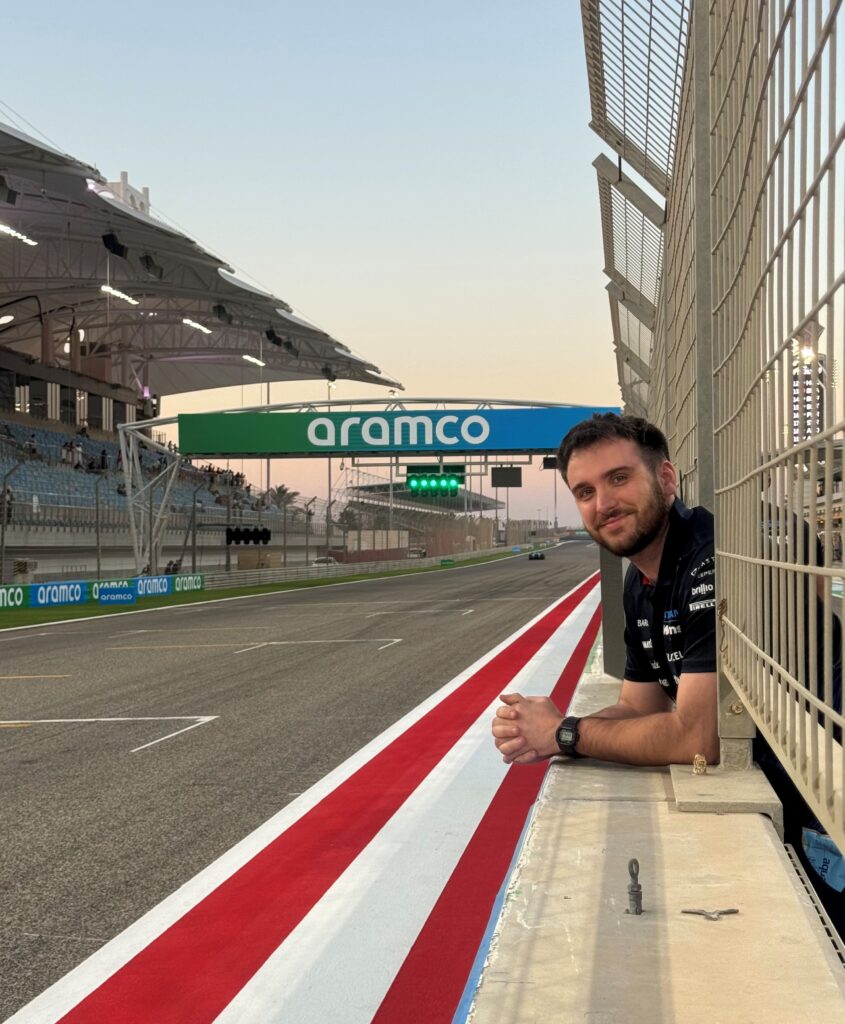
Luke Eve (LGS 2019)
Design Engineer – Williams Racing
What first sparked your interest in engineering, technology or motorsport?
I remember as a kid, watching Formula One races with my Dad, gaining an interest in the sport, and getting to know the teams and drivers. As I got older and began to consider careers, I had an interest in fixing things and how things worked, and was good at the sciences and maths, so naturally decided on becoming an engineer, however it wasn’t until university that I realised that becoming an engineer for a Formula One team would be a viable option. I was lucky enough to then get an Industrial Placement year at Williams F1 Team, before returning here full time once I’d graduated.
Can you briefly describe your current role and what a typical day looks like?
My current role at Williams is a Design Engineer, working as the Lead Engineer of the Bodywork. What this means is I use 3D CAD software to design the car components, working closely with many other groups within the team, such as aerodynamics, structures, manufacturing, etc, to deliver optimised, lightweight carbon fibre parts to be raced around the world. As cliche as it sounds, there is no typical day in F1. As a design engineer, you see car parts through their whole lifecycle, from concept to delivery, which involves conceptual scheming, designing components, assisting manufacturing, and talking with Race Team to solve any issues with the component out at track, so on a typical day you can be working on any part of that journey, on any number of parts/assemblies.
For readers unfamiliar with the sport, how would you explain what your work contributes to a Formula One team or the wider motorsport world?
Formula 1 is a sport where success can be decided by fractions of a second, so aerodynamics and mass are critical, meaning you want your parts to be as light as possible, and providing the most downforce and least drag. It is our job to take the overall shape that the aerodynamicists want the car to look like, and turn that idea into physical parts and assemblies (and the moulds needed to make them), and ensure they are made to a high enough quality to provide the maximum performance to our car at track.
What is the most exciting or rewarding part of your work?
The most exciting and rewarding part of my job is watching the races on the TV, seeing parts I have designed driving around the track, and knowing I’ve contributed to a team competing at the highest level of motorsport. As I design the bodywork, these are all external, aerodynamic components, meaning they make up the majority of the visible components on the main body of the race car, which makes it easy to point at a part and say “I did that!”.
Looking back, were there any teachers, subjects or experiences at school that influenced your career path?
The main one for me was Car Maintenance club that Mr Jackson (D&T) used to run as part of Thursday afternoon Activities. As part of this club we were taught how to work on cars, working on both a classic Land Rover and Mazda MX-5, which we got to drive around tracks on various field days. This was really my first experience of hands-on car work and I used this experience to start a hobby of buying, restoring, and selling classic MX-5s, which is something I talked about a lot in my interview for my placement year at Williams F1 Team.
What skills or qualities are most important for someone hoping to work in this industry?
I think the main skills needed to work in F1 is a good work ethic, good problem solving skills, and being able to think on your feet, because this industry is extremely fast paced, having to solve engineering challenges under extremely tight deadlines. Very little of what you learn in school/uni will be directly used in your job, instead you’ll be put on the spot and will need to apply what you know to a new situation or problem.
What advice would you give to current students interested in similar careers?
Obviously focus on building a strong foundation in Maths and Physics, but what’s most important is the extracurricular activities you do that will make teams want to hire you. Breaking into the industry requires you to stand out from the 1000’s of other people with the same school grades and uni degrees. Don’t be discouraged if the path isn’t straightforward – stay curious, work hard, and keep looking for ways to develop your skills. Passion and persistence can take you a long way.
In one sentence, what makes working in motorsport so exciting?
Working in motorsport is so exciting because no day is ever the same, as the sport is constantly pushing boundaries to redefine what’s possible in a race car, with a whole team dedicated and driven by the same two things – speed and success.
Tom Fanthorpe (LGS 1999)
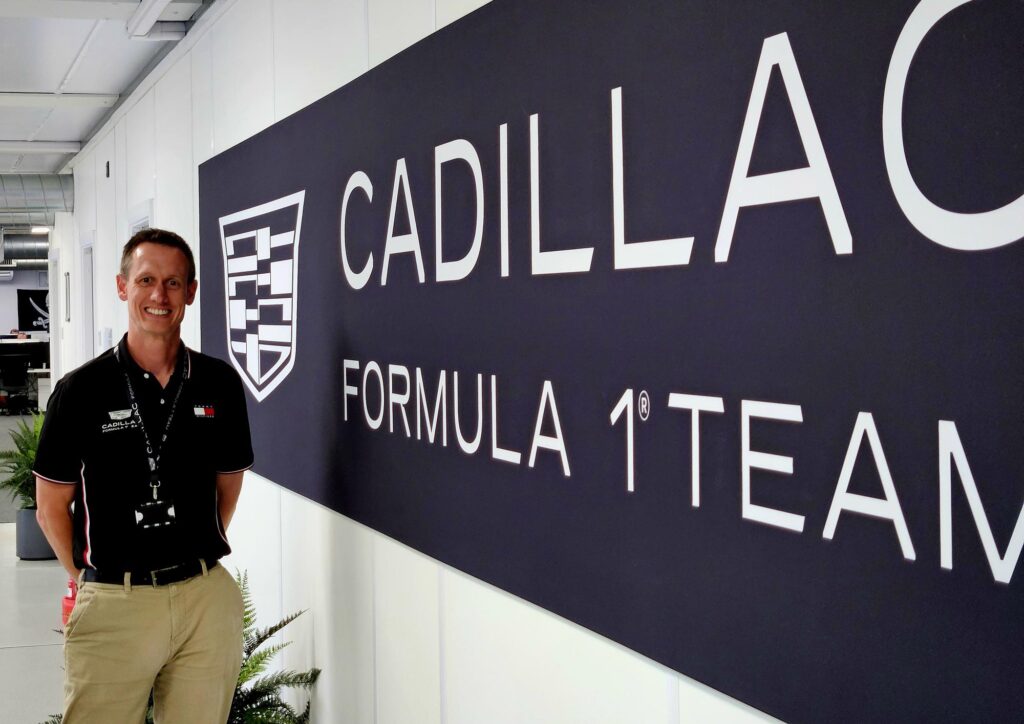
Head of CFD, Aerodynamics – Cadillac F1 Team
What first sparked your interest in engineering, technology or motorsport?
Living close to East Midlands growing up, I was fascinated by anything to do with aircraft and what helped them fly. Coupling that with a love of watching F1 on TV, it was then fitting that I could combine the two; perhaps not helping aircraft fly but using the same theory to keep F1 cars on the ground.
Can you briefly describe your current role and what a typical day looks like?
CFD (Computational Fluid Dynamics) simulates the airflow around the F1 car, allowing us to see how the shape of the components on the car manipulate the air to generate downforce, keeping the car stuck to the track and so allowing it to go round corners faster. Aerodynamicists use CFD to help decide which parts perform best and so which parts we should send to the windtunnel to test on the windtunnel model of the car.
If we were to model every aspect of physics in the flowfield, each simulation would take years to solve. In leading the CFD group, my role helps to coordinate the efforts to automate the setup of these CFD simulations as well as decide which areas of physics we need to approximate so the simulations take a matter of minutes, not years. The better we do, the better the CFD simulations match those carried out in the windtunnel and the behaviour of the car at the track, helping the aerodynamicists add performance to the F1 car more rapidly. Therefore it is imperative that we understand how well the CFD model matches the windtunnel and track. Day to day my role ensures each area of the CFD group is aligned in the development and automation of the CFD simulations and focussing on improving the areas of correlation with the windtunnel model and car at the track which will bring the most performance.
For readers unfamiliar with the sport, how would you explain what your work contributes to a Formula One team or the wider motorsport world?
By extension of my role day to day, the more accurate the CFD simulations can be and the more closely the simulations match the behaviour of the windtunnel model and car at the track, the more rapidly the aerodynamicists can add new, better performing parts to the F1 car. The more quickly we can add more performance to the F1 car, the lower the laptimes will be and the further up the grid we will finish.
What is the most exciting or rewarding part of your work?
On a higher level, the ever-changing requirements to make the car quicker across different tracks, responding to feedback from the racetrack and never adding enough performance to the car means the job is never boring. On a more personal level, the most rewarding part is working with so many inspired and skilled engineers in my group and managing to focus all their abilities to achieve something incredible. I genuinely learn something every day from their enthusiasm, ingenuity and talents.
Looking back, were there any teachers, subjects or experiences at school that influenced your career path?
It is difficult to pick out individuals since so many teachers influenced the subjects I ended up loving. Mr Lane always stands out for giving me particular appreciation for physics and making the lessons fun at the same time. Mr Salter too, my A-level maths teacher said something that stayed with me forever – I enjoyed languages through school especially French and for a short time considered studying that at university. Being a Maths teacher, he was keen I pursued a more Engineering-based subject so said to me, “Tom, I don’t think you actually like French, you just like getting it right.” It turns out he was right and I never looked back, going on to study Aerospace Engineering after that. For some reason, his comments always stayed with me any time we have a particularly challenging puzzle to solve.
It also goes without saying that all of the Team sports, in which I was involved, were invaluable in instilling the importance of bringing together all the talent across a team and working effectively with every member, to get the best outcome.
What skills or qualities are most important for someone hoping to work in this industry?
Depending on the role they wish to choose, a relevant technical background will be important to understand the context and to show they have the aptitude required, although training on the specifics of that role within F1 would be picked up once they start.
Above all however, especially as the demands of the sport become more challenging, the right personal characteristics are increasingly important. The ability to understand how your team members think and are likely to react in the wide range of situations they will be put in and stresses to which they will be subjected, is key to working well in any of the groups within the team. The pace of work may be quick and demands often intense but keeping calm and maintaining the same logical thought processes while working within your team through these situations are the most likely characteristics that we would look for during recruitment phases whatever the level of seniority.
What advice would you give to current students interested in similar careers?
Follow your passion. It’s an obvious statement but, within F1, there are so many routes to go down whether that is a practical, hands-on trackside role that is of interest or a more design-focussed office-based role, motorsport can cater for every appetite. What we desire most from any applicant is that they show passion towards the sport, whether that is having clear interests that demonstrate it or seeking out relevant work placements or work experience during the summers or free time. If your heart is in it from the start, it will rarely feel like a proper job, more a way of life!
In one sentence, what makes working in motorsport so exciting?
The landscape never stands still from year to year, meaning no day or week is ever the same, and being able to make a tangible difference in how the car performs very publicly on track (and on TV) each week, has kept it constantly exciting for me over the last 22 years.
Hayden Barradell (LGS 2010)
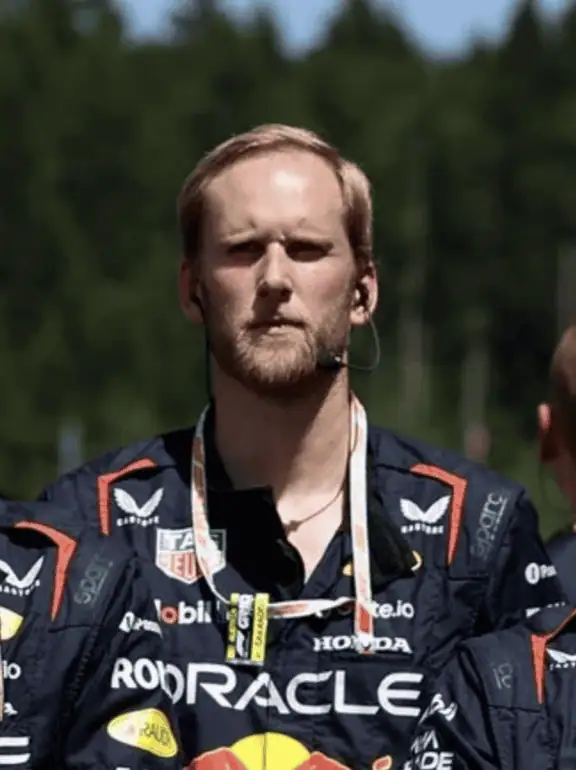
Group Head of IT Infrastructure – Red Bull Technology Group
What first sparked your interest in technology and motorsport?
Answering this honestly, motorsport never played any role in my life before walking through the doors of Red Bull Racing back in 2012 during my student placement year. I was asked who my favourite driver was among interview smalltalk, and was only equipped with Sebastian Vettel as an answer as he was on the cover of some magazines in reception. Technology, on the other hand, hooked me early, pushing and often redefining the boundaries of what is achievable. I’ve always loved playing around with the art of the possible with both hardware and software. F1 and racing added adrenaline, especially the Red Bull way. Where else is there an extreme sport hands on for IT? It clicked for me instantly and I have only ever looked onward with Red Bull.
Can you briefly describe your current role and what a typical day looks like?
I’m the Group Head of IT Infrastructure at Red Bull Technology Campus leading teams of engineers that support all the core systems behind our engineering, simulation, manufacturing and trackside racing operations. I head four main areas of the department:
– IT Infrastructure
– Trackside Event IT
– High Performance Computing & Platform Engineering
– DataCentre Management
Day to day I tread the delicate balance of keeping the lights on, driving forward innovation, strategic financial planning for the future and taking my moments of reflection to solve those deep technical challenges to deliver gains translating to direct car performance.
For readers unfamiliar with the sport, how would you explain what your work contributes to a Formula One team or the wider motorsport world?
Think of F1 as a giant data machine on wheels. My role is to make sure all the digital systems behind the scenes both on and off the car are fast, reliable and secure so the people designing and operating can do their jobs. In simple terms: we keep the tech working so the car can go faster and no one has to shout “why is the network down?” five minutes before qualifying.
What is the most exciting or rewarding part of your work?
In F1, the impact of a good decision can show up immediately. A snap decision trackside in our world can be the difference between pole position and starting at the back. When infrastructure performs well, engineers can develop faster and make informed decisions – and that translates into performance on track. Seeing that link is incredibly rewarding, especially when your decision was the pivotal moment. Within the team, you are surrounded by everyone under a clear and common goal. Every single one of us gives everything and beyond to ensure our drivers have the platform to return a World Champion. We win together.
Looking back, were there any teachers, subjects or experiences at school that influenced your career path?
Absolutely yes, but not necessarily the obvious candidates given my career path to date. Obviously studying IT was a catalyst to Computer Science as a university route but looking back at so many subjects and teachers that have shaped my development there are plenty that stand out to me. Spanish with Mrs Fisher, History with Dr Walker, French with Madame Finlan, Mathematics with Mr Salter were all subjects that really shaped and honed my interests and skills for life beyond LSF. It is amazing how much I draw on experiences learned and gained in Davis house activities and rugby throughout the years. It may not feel like it at the time, but these experiences really do prepare you for the world.
What skills or qualities are most important for someone hoping to work in this industry?
It certainly is different between departments and specialisations. When I am recruiting the most important factor is the person beneath the qualifications or skills. Theory can be taught to an inquisitive and receptive mind, qualifications attained, and wisdom imparted, but the right attitude and relentlessness to make every day a victory shines beyond anything else. The ‘trackside mentality’ I call it. Be your authentic self and if this F1 world is your aspiration, then show your potential as world champion material. Everyone at LSF is packed with potential.
What advice would you give to current students interested in similar careers?
Be hands‑on. Set up servers, write scripts and code, break things and then fix them. Don’t shy from any challenge and never fear getting it wrong. Real experience stands out far more than an endless list of certifications. And don’t worry if you don’t have everything figured out as most careers aren’t straight lines. Follow what genuinely interests you and take opportunities when they appear. Something will call your attention one day, blink, and you’ll be 10 years into the best learning journey of your life.
Many people think of Formula One as purely engineering. How important are careers in IT and digital systems to the sport today?
They’re absolutely critical. Modern F1 relies on simulation, data analysis, connectivity and huge amounts of compute power. Without world‑class IT infrastructure, the engineering side simply couldn’t function. The sport is now as digital as it is mechanical, even more so every day. Beyond the engineering side, the sport itself has a cumulative audience of over 1.8 billion viewers annually. Marketing, Digital Content and Commercial aspects of the sport are also on the same explosive growth trajectory. New advancement is exponential in capability delivery and everyone is looking at IT to lead the charge pioneering the way. It is an exciting time and F1 is on the bleeding edge and an example in the art of the possible for wider industry.
In one sentence, what makes working in motorsport so exciting?
The scream of the engines under high revs, the shake in your ribs as it fires up, the pressure of your first pitstop, the adrenaline of the big wins and the banding together after a tough week… No other job in IT like it.