
Beyond talent
The qualities that make professional footballers successful
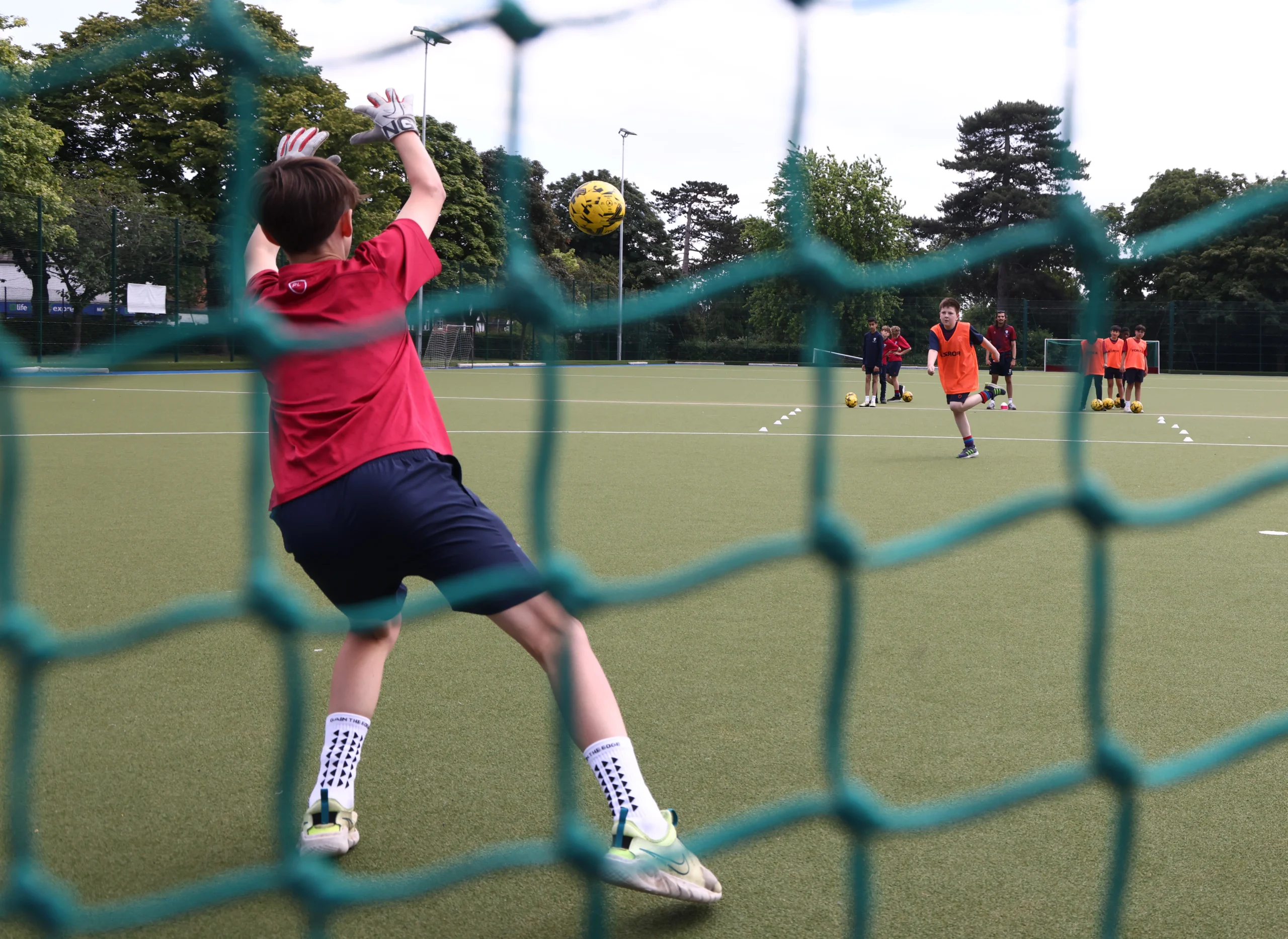
What values and skills combine to create a successful professional footballer? Professional Football Manager, Marti Cifuentes, joins Loughborough Schools Foundation’s Head of Football, Perry Wild, to explore why talent is just one of the reasons why players succeed. From resilience to attitude, curiosity to team culture, discover how these qualities can be shaped into success.
Perry: You have been a part of many young players’ journey from academy to professional football and in many ways, you have almost become known for bringing through youth. Why take the risk on these younger players?
Marti: Well, first of all, I don’t think it’s necessarily a risk. It’s just about trust. For me, usually it’s not about the age, but about the talent and the quality. So that’s what I what I usually try to see in the players. But at the same time, it’s true when a player is young and doesn’t know professional environments, you need to help him to build a platform where he can perform.
Perry: So, when you say that you just trust them, what earns that trust? Is it the talent aspect, or is it consistency or those behaviours that you see day-to-day?
Marti: Probably the best word to describe it, I would say is the quality. But sometimes we just understand quality by the technical level of a player or just the pure talent of the player, right. And for me, it’s much more than that. It is about how they behave, how mature they are, especially on the pitch, because sometimes we forget that we’re putting sometimes very young kids, 16-17, in an adult environment with high demands, with people earning a lot of money and with a lot of pressure that comes with professional football. Usually, I would say that that’s the part I rate the most, the whole player, the mental part, the technical part, the quality part.
Perry: And if you think about the development from a young player coming up into a first team environment, from that coaching and the environment, how much of it is down to the player ownership of their own development.
Marti: Obviously it’s not easy to find the right balance because sometimes it depends on how the academy has been working. So as a first team coach, when I arrive to a club, the setup is already is already there. And sometimes you can share some views, you can share some thoughts about how the academy can improve. But at the end of the day, there is a process there.
So if we speak about individual cases, when I arrived to Hammerby, Williot had already been in the club for many years. So, it’s clear that there is a path. And in some clubs this path is well- structured, some have better structure than others – that’s the reality. But for me it’s very clear that we need to work together with all parts of the club, from the sporting director to the board to the academy.
Perry: If you went into a club and watched training sessions or you came in to watch our sessions, what behaviours would immediately make you think ‘this player’s got a future’?
Marti: The way he interacts with other teammates, especially if he listens to instructions from the technical staff. How is the level of focus of concentration during the whole session? That’s something that I rate as well because sometimes younger players can struggle in terms of keeping the full focus for whatever it takes, 90 minutes or for the whole session. But especially, as I said, the way he interacts, especially with experienced players that usually are more vocal, they can lead more. So how, how do they follow these? How do they interact with them as well, sharing their point of view, for example.
I think that at the end, when you see a young player that is interacting well with all the teammates, with all the staff, that shows a level of matureness that gives me the confidence that they are ready.
Perry: That’s a really interesting point, Marti, because of the importance of coachability. Do you think players ask enough questions. Do you think they’re curious enough to want to more?
Marti: It’s very valuable when it comes from the player. The interaction is growing and then you can get much more from the relationship at the end. I would say that perhaps I can see that even more after 25 years of coaching that younger generations are different to what they were like at the beginning when I started coaching. So the reality is that the way we need to interact with them, the way we need to build these relationships is different because time has changed. Now they spend a lot of time with the phone on the screens. They can be a little bit more in their own world and to get there, you need actually to connect in a different way.
But of course, all of this depends as well on the education they receive at home. All the contacts, all the family, How they are educated? But it’s great, of course, when you find a young player that is open and proactive to search for improvement areas.
Perry: Where do standards come from and how do these standards become habits?
Marti: I definitely believe that it’s, what I call, the culture inside a club. It comes from everywhere. Obviously the staff are one of the main cultural drivers in my opinion. But, as well, experienced players are very important in that part to set a certain daily standard.
So if you are used to an environment that is perhaps a bit lazy or not challenging enough, that’s what you get. That’s a reflection of the club or of the team. But instead, if you have a lot of people that are very driven and they push to get better to create those high-performance environments, then you’re going to get players that are happy to get into that kind of environment that they search for that kind of daily improvement and you end up with a bunch of people that is that are pushing to improve.
I think it’s vital that everyone can contribute because for a young player who steps into this kind of environment, it’s much easier. Whilst in the beginning, it can be challenging depending on the culture at the Academy level but in the long term, the young player will be the one that benefits the most because he’s the one that can definitely develop more and can improve the most.
Perry: And in terms of that development, it’s been well documented that those with the physical dominance early on, tend to progress much quicker. How do you avoid confusing that physical maturity with football potential?
Marti: Football probably is the only sport that challenges most of the rules because we are not playing with our hands. So actually, we play football with our legs, that is what we used to move around. So actually the level of requirements is a bit different compared to many other sports.
I’ve seen a lot of times that when players are 12,14 or 16, they are physically very, I would say, well developed. But when they come into the men’s game, then that advantage is gone and they struggle because they couldn’t find new solutions or they didn’t search actually, probably unconsciously, but they have not searched for different advantages that they probably will need in the future because their physical superiority was enough to make a difference at the kids level.
I think that many times the best players, the ones that really make to the top, are the ones that, when they are 13,14 or 15, they are obviously talented, you can see that there is something in them, but at the same time perhaps they are not the most dominant on the pitch at that age. So I think that it’s part of them searching for new skills, developing new skills based on the environment, based on what they need to face in every game, in every training that will make them more complete players at the end.
So, yes, physicality and especially the way the game is developing over the last years in many leagues with higher speed runs, with higher demands from a physical point of view, the game is getting much tougher in that part, not only because of the demands of the game, but the demands of the calendar with more games through a season.
But at the end, this is a game that you play with your brain but using your legs.
Perry: Exactly, and if you think about a lot of the Hammarby players, many of them had their birthdays in the fourth quarter, making them just one week away from being in the younger age group. Their dominance wasn’t that clear early on but actually, like you say, by having to solve the problems they were up against, when it came to the men’s game, they were already in that position to negate those disadvantages they might have, through movement, technical, special awareness, for example.
If you had a player who was perhaps a bit despondent at that age, maybe he’s technically really good, but physically behind, what kind of advice would you give to them to be able to progress?
Marti: In my opinion, football is about timing. Most of it is about time and space. The more time you get on the ball, the easier it is to execute everything. And to get that time, you need to be in the right space which is basically about anticipating the next play.
If you are very quick, very fast, you can make a living in football, that’s for sure. But at the same time, the best players are always the ones who can understand the game and, in some way, outsmart the rest.
There’s plenty of examples in the history of football about top players who, from a physical point of view, they were not the strongest, they were not the fastest, but they were just at the right time at the right spot during big parts of the game. So I think that nowadays we can see that even Lionel Messi, he’s 39 playing World Cup level. So probably the highest level that a footballer can play. He’s probably bottom three in terms of running parameters in the in the whole World Cup and he’s the top scorer and probably the best player so far in the tournament. So I think that is a summary of what the football game is.
Perry: For young players, especially in the Academy system, they really have that strong ambition to become footballers. But we know that it’s only a very small percentage that may really come to play professionally. And I think that’s what makes supporting them with alternate routes in education so important.
In comparison to the States, for example, where most of the top pros, they go and get a college education, do you think you think there should be more onus on clubs or do you think there should more awareness from parents? How do we ensure there’s support in place for those who don’t make it through to professional football?
Marti: Yeah, I guess that you made the point in the beginning – the percentage of kids that will become professional footballers is so small. So, it takes some responsibility, I would say, from the clubs. And obviously, every country is different because the grassroots in every country is different and the nature of their systems is different. So it’s difficult for me to compare the American model because obviously I know about it, but I don’t experience it.
The main one for me is to help the parents to understand and actually to be very clear that the chances of their kids becoming the next Messi are probably less than winning the lottery. So I would like to encourage all the parents, and that’s what I do with friends and with everyone that asks me, first of all, make sure that your kid is having fun. That’s the most important thing, that they play sport, football or whatever is the sport, but especially in the case of football, it’s a fantastic sport to learn a lot of values from that for instance, in my case helped me a lot to shape who I am today.
But in terms of teamwork, in terms of respecting the position, in terms of a lot of values that you need to share when you are in a group, I think that this is extremely useful for lives out of football. And then to be aware that even though you play at competitive level, it’s just very few players that can make it into the very top. So I think it’s great to educate players in a competitive environment. There is nothing bad about it as long as we remember that we do this as well to have fun and to create this kind of environment where the kids can develop in a healthy environment.
Yes, setting higher standards because I think it’s good for them to understand that without effort you will not achieve certain things in life. But I would say that it is an important responsibility of the clubs to teach everyone and to make them understand that it’s very few of them that will make it to a certain point, and to give them the tools to understand that there is life outside of football. You need to be prepared because even the best players can sometimes have an injury that will stop everything.
Perry: Here in England where I’m working within the Independent School sector, you have big rugby, cricket, and athletics schools. They produce professional players, or they help produce professional players, and it’s a common sort of development pathway. Football doesn’t seem to have that. It’s very late coming to it.
If there was a pathway through a schooling system to complement academies, what are the essential ingredients you need to make it credible for the players, for the parents and for professional clubs to work with institutions?
Marti: First of all, I think that the main point is that actually, you spend a lot of time with the kids. So the fact that you have the opportunity to train them in hours that usually the clubs cannot is in itself a big advantage that I’m sure many clubs will see.
The second part is that obviously, you know the kids very well and I’m a big believer actually, that especially at early stages, there is a big benefit on young people playing different sports. First of all, because then they can pick the one that they like the most and second, because in terms of motor skills there is an advantage to playing different sports.
So the fact that the kids can train in school hours is a big advantage. So it’s just about working together with the clubs to understand as well how much you need to train, what areas of the game perhaps you can train. It also probably comes from a different point of view because the clubs are looking to try to develop plays for the first team environment. I think that in the school you can have an approach that can be very useful not only for them, but at the end for the development of the kid.
Perry: And I guess we’re trying to break the mould by becoming one of the early adopters of that. And we also see that in the next level down from the Academy, a lot of players are coming through a non-league system. What we would like to do is provide an alternate route in that they can get their strength and conditioning, they can get sports science analysis, individual training, which is position- specific, which a typical grassroots club wouldn’t offer to their players because they are typically volunteers or they don’t have those resources. So can you see that as an alternate route?
Marti: Definitely I can, and I see the value especially if you can provide them with this kind of high-performance environment, providing the players with all the attention, all the focus, all the tools that are needed to develop. I think it’s definitely a route that in the specific English model, I’m sure that it can it can work really well.
Because perhaps the challenge that I have seen in English football is that obviously at the moment the Premier League is the best league in the world. Then you have a championship that despite being a second tier, is one of the best leagues in the world at the same time. So the level of the players, the structures of the clubs are so powerful, meaning that for the younger players it is not easy to get, especially because the step from the under 21s or the reserve leagues is very big compared to the professional game. So the fact that you can provide them another route to get to leagues is great.
Perry: Do you have any advice for parents who have kids who want to embark on this football journey?
Marti: The main thing for me is ask them every time after a training session, ask them every time after a game if they had fun because at the end that’s the most important. As I said, it’s very few cases that will make it into professional level, so the most important is that we are helping them to develop as human beings, as persons. We are shaping through those experiences who they will become tomorrow.
So instead of getting into questions like ‘why didn’t you play more’ or ‘why did your teammate not pass the ball’ I think that there is another much healthier approach that is based on was it fun?
But for me, the biggest value is what you learn in every game, in every training and if you have fun through the process and that’s what I think as parents, we need to encourage.
Latest News:
Bowled Over By Your Generosity
Significant investment in sport set to take facilities to the next level
How we’re securing the future of sport for generations to come
We’re delighted to share that a proposed investment in the future of sport at Loughborough Schools Foundation has been approved by the Foundation’s Board of Governors, subject to planning permission. The major investment includes plans for a new 3G sports pitch, as well as …