
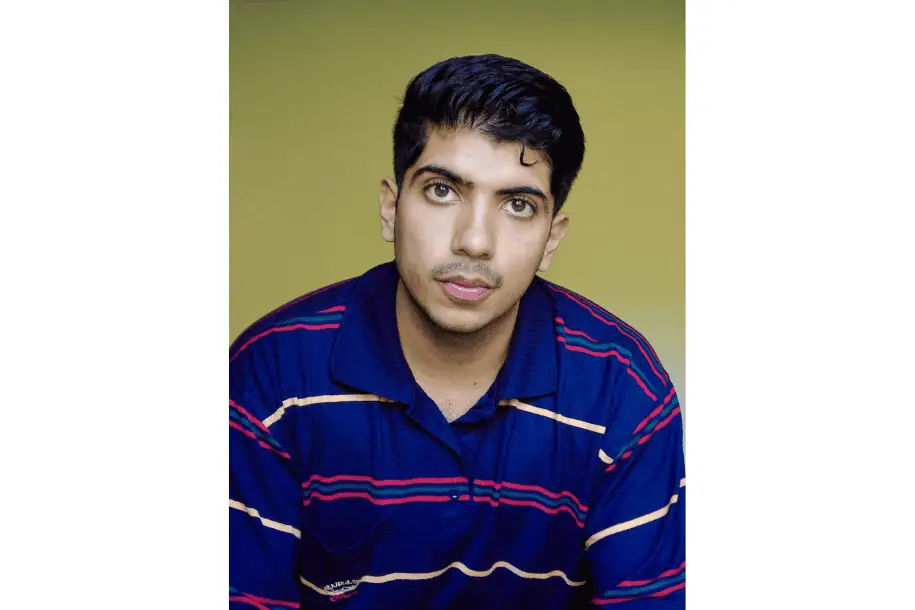
Hamza Ali (LGS 2016) shares with us his journey from LGS, where the opportunities available helped him develop a passion for directing and theatre. Hamza explores the art of storytelling through movement and reflects on his experiences as he looks forward to starting his new position at Nottingham Playhouse.
1. Where did your passion for directing and the world of theatre first begin?
My passion for directing began at school! Mrs Bruton, Miss Boon and Miss Welsby were all fundamental in supporting, encouraging and developing both my skills and my passion for theatre, and of course Mr Vickers and Mr Broughton too.
I remember directing my first play in Year 10 or 11 for the New Directors Festival, and I never really stopped directing after that. It’s now been 10 years since I left school and I’ve built a sustainable career as a freelance artist, so the foundations they laid have really stood the test of time.
2. Can you tell us about the original play you helped devise for Edinburgh Fringe Festival?
It was a play called Caged, about a young woman’s relationship with her father, who was incarcerated. It was inspired by an article I had read at the time. Mrs Bruton and Miss Boon kindly asked me to direct the show when I was in Year 13, even though it was usually teachers or former students who directed the annual Edinburgh show. So, it was a real honour to be trusted with that responsibility.
My experience of being in Edinburgh is what inspired me to pursue a career in theatre professionally.
Then, being welcomed back as an old boy several years later to direct the Edinburgh Show once again is easily one of my career highlights. The show, 1518, did incredibly well; I think we sold out almost every performance. But most of all, the Year 12s who co-created and performed the show – Tatenda, Jessica, Victor, Alice, Ryan, Josephine, Will and Lila – were some of the most creative, professional and committed young people I’ve ever had the pleasure of working with.
3. Can you tell us what your work as an interdisciplinary movement artist involves?
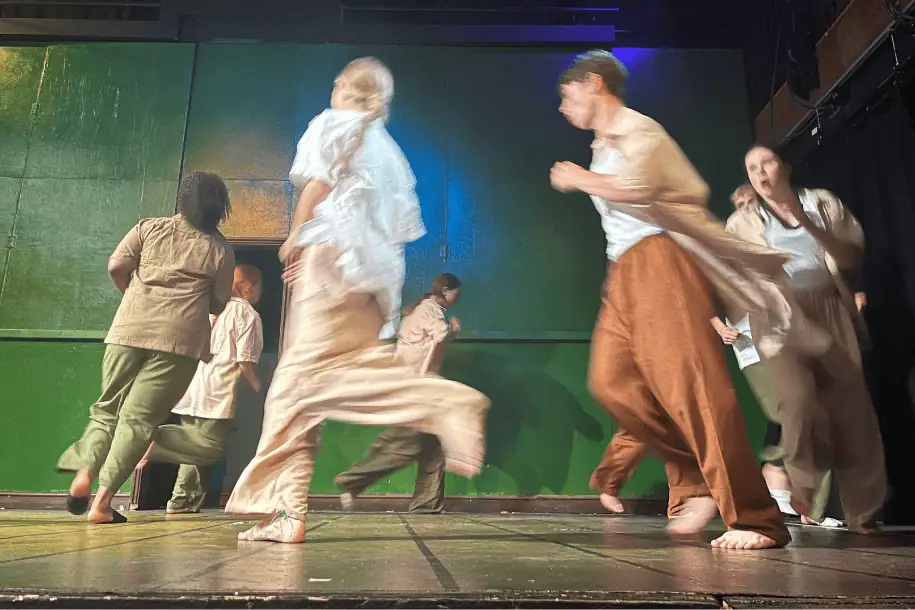
Yes! It makes it sound fancier than it is, but really, it’s about directing the physical aspects of a theatre production, TV show or film.
That can include complex movement sequences – essentially choreography – but it can also involve things like character physicality: how an actor might embody someone who is old, drunk or injured. It can involve researching how people moved in a particular period, from how they greeted each other to how they ate, danced or carried themselves.
I’m currently working on a family musical set in outer space, so I’m trying to work out how to create the illusion of zero gravity using movement and some clever lighting tricks!
A great example of a movement director is Polly Bennett, who has worked on major Hollywood biopics including Elvis, Bohemian Rhapsody and Back to Black. She helps actors study archival footage, then directs them to move, walk, and perform like the real people they are portraying.
4. What drew you to this type of work?
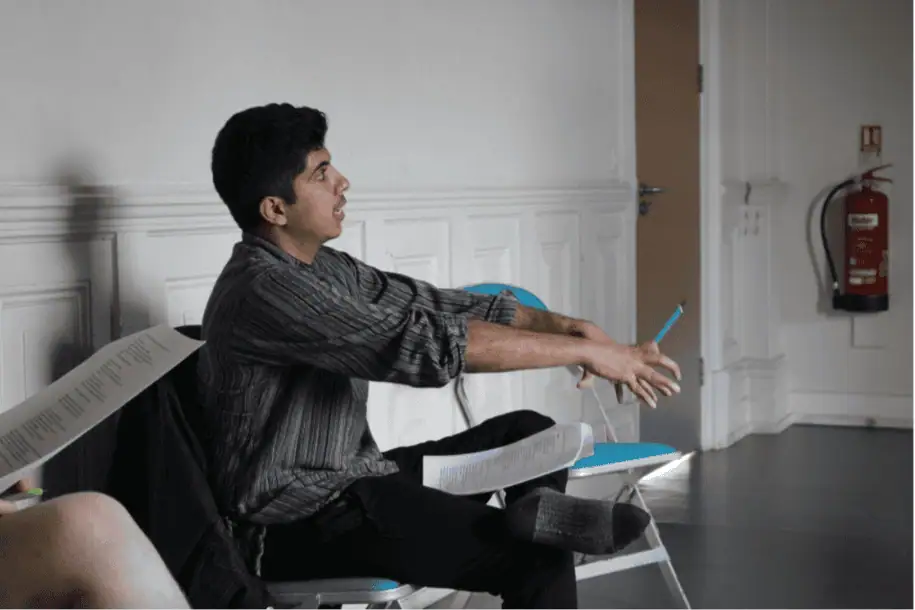
Once again, it all started at school. I remember my GCSE Drama teacher, Miss Welsby, being a big fan of physical theatre and taking us to see the work of theatre company Frantic Assembly.
From the beginning, as someone who loves sport and being active, I found it a wonderful way to tell stories in a non-verbal way. It wasn’t until I did my Master’s in Movement at the Royal Central School of Speech and Drama that I discovered one of the main reasons I have such an affinity for non-verbal storytelling is because my older brother is hard of hearing.
Growing up, my language for play and communication was therefore always rooted in action as much as words. I think that has had a huge influence on the way I understand storytelling and why I’m drawn to movement as an artistic language.
5. What other plays have you been involved with throughout your career?
I tend to work on a lot of contemporary theatre and new writing, so unfortunately not a huge number of classics or musicals – the ones people tend to know! But I’ve been lucky enough to be involved in some incredible projects.
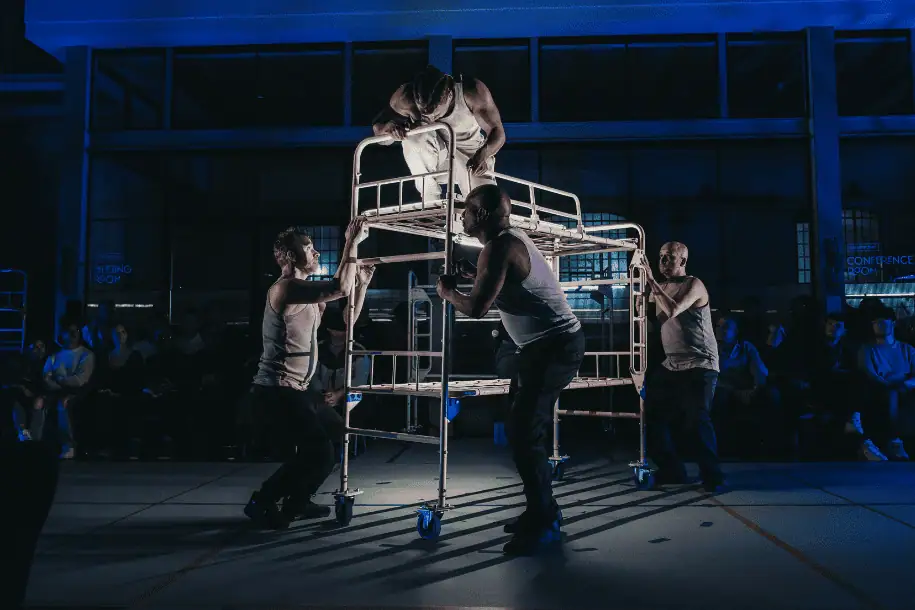
I was the Resident Director on a site-specific show called Kiss Marry Kill, which we developed at the National Theatre Studios before taking it on a UK tour, including to Shaftesbury Avenue in the West End.
The show toured to deconsecrated churches around the UK and was set in a prison, so we had beds from Holloway Prison that were put on wheels and moved around during the performance. We also worked with the company Synergy Theatre, which meant that half of the cast were ex-prisoners. Their own personal stories and experiences really informed the development of the play and made the process incredibly special.
6. What are you most looking forward to about joining the Nottingham Playhouse team?
There’s so much to look forward to. It’s quite rare to hold a position for so long in the arts, so being at Nottingham Playhouse for 18 months will give me the opportunity to learn a huge amount about how a large producing theatre operates, from both the creative and business sides.
I’ve already had some really insightful conversations with Adam Penford, the Artistic Director, and Stephanie Sir, the Chief Executive, and I’m excited to learn from both of them and the wider team.
It’s also a real pleasure to be back in the East Midlands. A lot of my work has been in London, so it feels like a bit of a full-circle moment. I’m particularly excited to work on new plays, develop local talent and be a trusted artistic voice within the Playhouse.