Digital safeguarding: what we have learnt about school marketing online
Last week, I joined speakers from AMCIS, IAPS and ISBA to present a webinar exploring the use of pupil images in schools. Positioning Loughborough Schools Foundation as the case study, I found myself discussing digital marketing safeguarding holistically, rather than simply talking about photography.
Looking beyond the photograph
When ISBA published updated recommendations around the use of pupil images in May 2025, it prompted us to look more closely at our own approach. Some changes were already underway, but the guidance gave us an opportunity to step back and research the issue more widely. We did not just look at whether an individual photograph was appropriate to publish. We looked at what happens to school content once it is online. Who can find it? How is it being found? Who is linking to it? What information are we making publicly searchable? And how could that information be used differently from the way we originally intended? That research took us well beyond photography and into the wider world of digital marketing, and some of what we found was uncomfortable.
What schools can learn from their search data
Digital marketing for schools is quite a specialist area and, over the years, I have heard a number of concerning examples from across the sector. One was the discovery of adult websites linking back to school websites, particularly those belonging to girls’ schools. Those school websites were doing exactly what school websites have traditionally done. They were full of photographs and videos showing pupils immersed in everyday school life. The concern was not necessarily the school’s own content, it was the audience that could potentially be directed towards it.
We started looking more closely at our own search data too. Google Search Console allows website owners to see some of the searches in which their site has appeared. Among completely normal educational searches, we found impressions and clicks relating to inappropriate adult search terms. That does not mean Google thought the school website itself contained adult material – search engines interpret considerably more than an isolated word, but it did make us look much more critically at language. Terms that make perfect sense within education can have completely different meanings elsewhere online. Phrases such as ‘single-sex’ or ‘schoolgirl’, for example, can form part of unrelated searches.
We therefore reviewed some of the language used across our websites and considered where alternative wording worked just as well. Following those wider changes, the inappropriate queries we had previously been seeing reduced until eventually we were seeing none. The recommendation I shared was simple: look at your search data. Do you know what people are typing when your school appears in search results? For most schools, that information is readily available, but if nobody is looking at it, potentially important patterns can easily go unnoticed.
Know who is linking to you
The same applies to backlinks. A backlink is simply another website linking to yours. In digital marketing, good-quality backlinks are valuable. Links from respected organisations, news websites or relevant educational bodies can help demonstrate that a site is useful and authoritative. But schools do not control everybody who links to them, and that is where the safeguarding concern begins. Spam, adult and other illicit websites can also create links to school websites, placing school content in contexts it was never intended to appear in and potentially directing completely unwanted referral traffic towards it.
Over the course of my career, I have heard examples from within the education sector of school websites being linked to from illicit sites, including cases where those links were associated with inappropriate traffic reaching the school website. That becomes particularly concerning when the destination is a site containing large numbers of identifiable photographs and videos of children.
From an SEO perspective, search engines are generally sophisticated at recognising low-quality or spammy links, so discovering an undesirable backlink does not automatically mean a school has a search-ranking problem. From a digital safeguarding perspective, however, it is still important intelligence. Schools should know where their website is being linked from, monitor referral traffic for unusual patterns and investigate domains that appear inappropriate or concerning. Our recommendation has therefore been to make backlink and referral monitoring part of regular website management. Digital safeguarding cannot only be about what a school chooses to publish. It also needs to consider where that content can travel, who may be finding it and what they will see when they arrive.
Public does not always look public
Another recurring issue we came across was document indexing. Schools understandably use their websites to make information easy for parents to access. A newsletter might be uploaded to the site, for example, and the link emailed to families. It might not appear in the navigation and there may be no obvious route to it from the homepage. But that does not necessarily mean it is private. If a file is publicly accessible online, it can potentially be discovered through search engines or other services unless suitable restrictions are in place.
Recently, I sat with a parent and demonstrated just how easily years of historic school newsletters could be found online. That exercise was revealing. One newsletter might contain very little information of concern, but years of newsletters can create a much richer picture. Names, activities, fixtures, trips, achievements, photographs, clubs and events can all build up over time. In isolation, each piece of information can feel insignificant. Collected over time, it becomes something much more substantial.
In an age where AI tools make large quantities of public information increasingly easy to search, summarise and connect, schools need to think differently about what they make openly available. One of the recommendations I shared in the webinar was therefore to audit what your website is actually making searchable, not simply what visitors can see through the menu. If information is intended specifically for current families, a genuinely restricted platform is far more appropriate than relying on the assumption that nobody else will find the link.
What happens when a child’s school life becomes content?
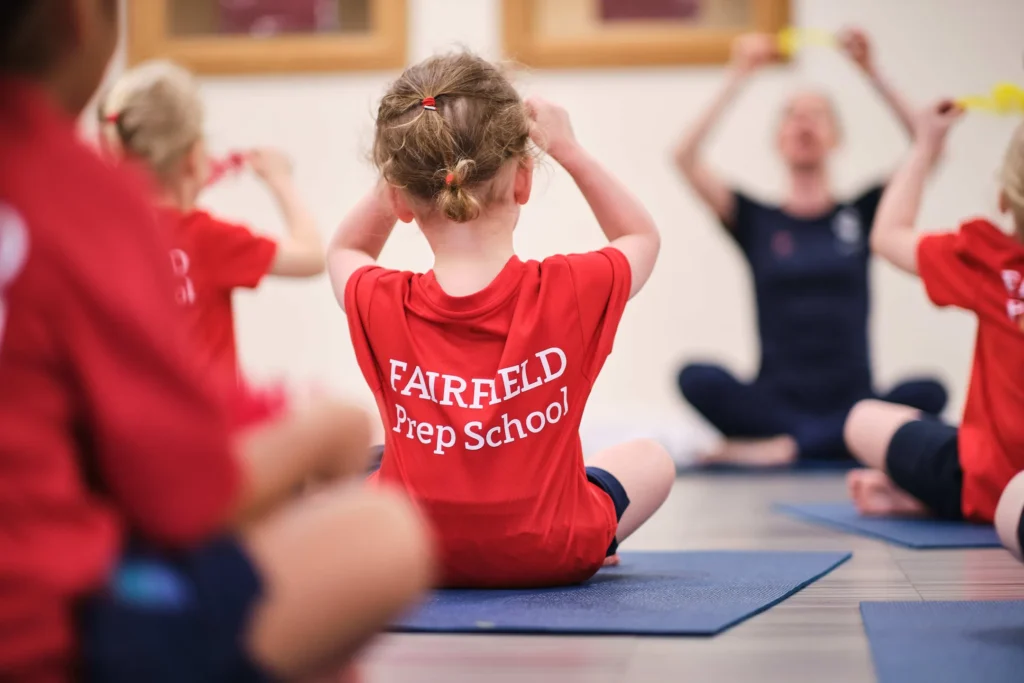
Images remain an important part of this conversation. Schools understandably want to communicate what school life feels like. Photography is powerful. It gives prospective families a sense of atmosphere that words alone often cannot. But our research made us think much more carefully about the cumulative effect. A child joins a school and appears in a photograph. Then another. And another. Over several years, that same pupil may appear across the website, social media, videos, advertising campaigns and school publications.
An outside audience may gradually learn what activities they enjoy, what sports they play, which events they attend and what they look like as they grow older. Their school years become part of a digital footprint they did not necessarily create for themselves. There is also a wider industry issue. Public school imagery can be downloaded, copied, republished, manipulated or placed in entirely different contexts. Developments in generative AI have made the potential misuse of images even more difficult to ignore, and schools do not necessarily know when that happens.
We heard examples from within the sector of school websites being copied by organisations overseas, including the photographs. Imagine having to explain to a parent that an image of their child, originally taken to celebrate school life, is now being used to market an entirely different organisation somewhere else in the world. Once content is public, control becomes very limited.
This does not mean stopping photography
None of this means schools should stop sharing images of children. That is not the conclusion we reached. Instead, we started asking whether every image needs to identify the child within it. Can you show the concentration of a science lesson without a close-up portrait? Can you show the energy of a sports match from further away? Can you capture creativity, friendships, performance and school atmosphere without making an individual pupil the product?
We have increasingly moved towards that approach across our public-facing websites. It allows us to continue telling the story of school life while reducing the amount of identifiable pupil imagery that is placed permanently on the open web. It is not about claiming an image is completely ‘safe’. Nothing published publicly can carry that guarantee. It is about designing digital marketing with safeguarding in mind from the beginning.
Sometimes publicity is in the child’s interests
There will always be occasions when identifying an individual pupil is entirely appropriate. A significant national award, representative sporting selection, major competition success or meaningful external recognition may deserve wider publicity. In those circumstances, the publicity can genuinely support the young person as well as celebrate the school.
But that should be a conscious decision. What are we sharing? Why are we sharing it? Where will it appear? Who will be able to access it? Does the pupil understand what is happening? Have parents or carers been appropriately involved? Those conversations become very different from routinely publishing identifiable photographs simply because there is space to fill on a social media feed.
The question we now keep coming back to
The biggest thing we have learnt through this process is that digital safeguarding cannot sit separately from digital marketing. The two are now deeply connected. SEO, social media, photography, website management, document storage and AI may traditionally have been seen as completely different areas. From a safeguarding perspective, they increasingly overlap.
Schools hold an extraordinary amount of information about children, so we have a responsibility to think not only about whether we can publish something, but whether we actually need to. For me, one question has increasingly become the starting point: is publishing this necessary, proportionate and in the child’s best interests? Sometimes the answer will absolutely be yes. Sometimes a small adjustment will allow us to tell exactly the same story with less personal information. And sometimes perhaps we simply do not need to publish it.
That is not anti-marketing. It is better, more considered digital marketing.
Watch the webinar
These were some of the experiences, observations and practical recommendations I shared during the recent webinar on the use of pupil images in schools. The discussion looks at the issue from several different perspectives, including safeguarding, marketing, legal considerations and the practical realities schools face when communicating online.
For anyone working in school marketing, communications, safeguarding or leadership, it is a conversation well worth having. Watch the full webinar here.

Ike Wright
Digital & Creative Manager

Ike Wright is Digital & Creative Manager at Loughborough Schools Foundation, where she leads on digital marketing and creative design across the Foundation.
Since joining in June 2024, Ike has played a key role in strengthening the Foundation’s digital presence, supporting the move towards safer website practices and leading the design project for the Foundation’s five websites, work which was later mentioned by The Guardian.
Working as part of the Foundation’s marketing team, Ike has helped shape a more ethical and safeguarding-conscious approach to school marketing. In 2026, the team’s work to align marketing practice with safeguarding strategy was shortlisted for an AMCIS award, recognising the Foundation’s growing sector leadership in this area.
Ike specialises in ethical digital marketing for schools, with a focus on safer storytelling, safeguarding-led social media practice and reducing the risks associated with children’s data, image misuse and AI manipulation.
Latest News:
Thinking outside the box
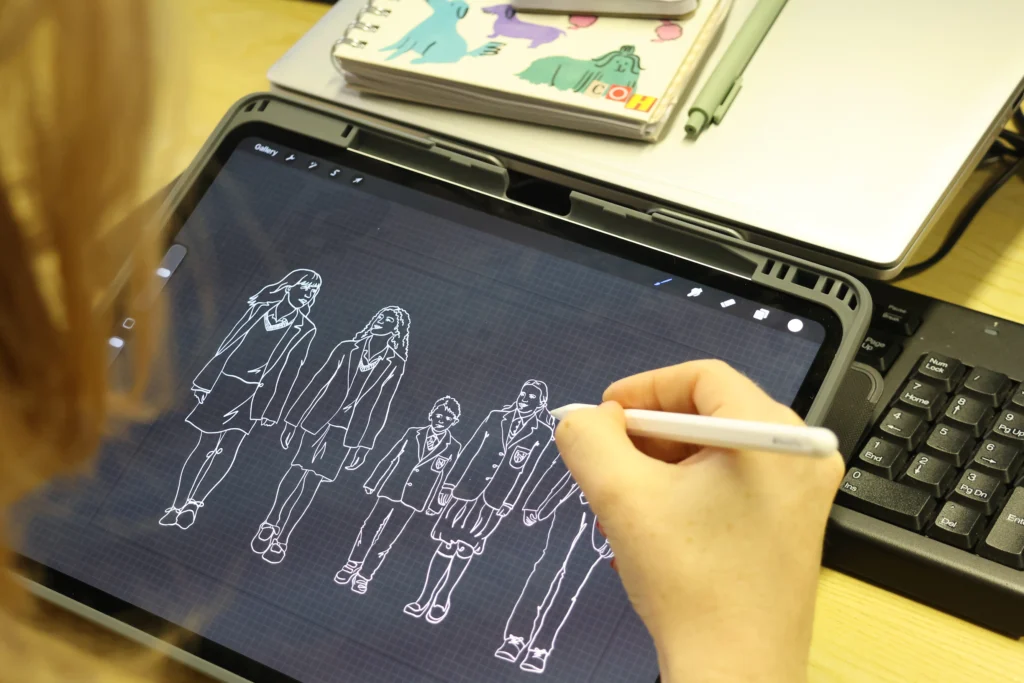
How hand-drawn illustrations have transformed our digital marketing
When it comes to redeveloping the visual identity of a brand, it would be easy to turn to creative software as a first port of call – looking for unique digital assets, AI generated ideas or ways to modernise existing concepts. At Loughborough Schools Foundation, we took …
Heritage Open Day 2026