
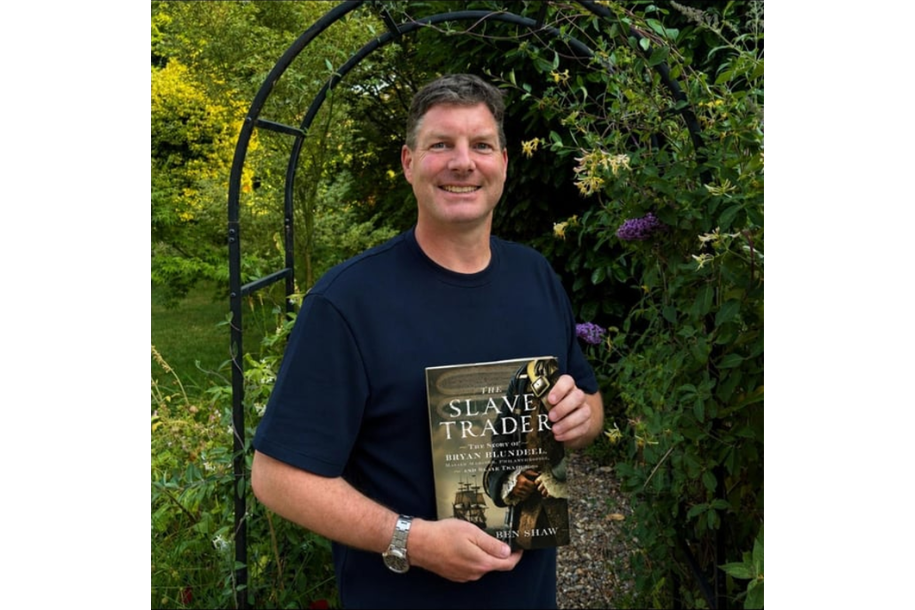
When I left Loughborough Grammar School in 1995, I never imagined that, thirty years later, I would be publishing my first history book.
Like many pupils, I enjoyed history at school, but it wasn’t until much later in life that I truly developed a passion for it. Looking back now, I owe a great deal to my history teacher, Mr Willson, whose enthusiasm for the subject undoubtedly planted the seed, even if it took a few decades to grow.
Today, I work in the NHS at the University Hospitals of Leicester, but outside work I have become an enthusiastic family historian. What began as a curiosity about my own family tree gradually led me to the fascinating story of Bryan Blundell (1674–1756), who I believe to be my eight-times great-grandfather.
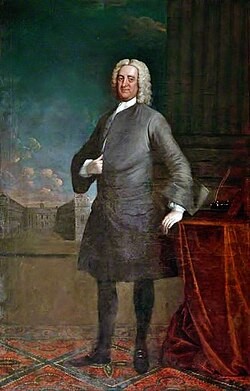
Blundell lived a remarkable life. He went to sea as a twelve-year-old cabin boy, became a master mariner, merchant, shipowner and twice Mayor of Liverpool. He also helped found the Blue Coat School, one of Liverpool’s oldest surviving charities. Yet later in life he also became deeply involved in the Atlantic slave trade.
The turning point in my research came with the discovery of Blundell’s original sea journal in the Lancashire Archives. It records his voyages from the age of twelve until his retirement from the sea in 1714 and provides a rare first-hand account of life at sea during one of the most transformative periods in British maritime history.
The story took an even more unexpected turn when I discovered another ancestor: the Reverend Christopher Bassnett. In 1711, Bassnett preached a remarkable sermon directly to Blundell and his crew, challenging them to consider the moral consequences of their actions at a time when Liverpool’s involvement in the slave trade was beginning to accelerate. Suddenly, two branches of the same family appeared to stand on opposite sides of one of history’s greatest moral questions.
What began as a piece of family history became something much broader. Through the lives of Blundell and Bassnett, I found myself exploring the extraordinary growth of Liverpool, the expansion of the Atlantic slave trade, and the uncomfortable contradictions of an age in which commerce, philanthropy, faith and human exploitation could exist side by side. More than anything, it became a story about why people make the choices they do, and what happens when the pursuit of profit and status becomes detached from moral responsibility.
The result is The Slave Trader: The Story of Bryan Blundell, published by Pen & Sword History. It is the first full-length biography of Blundell and draws on his sea journal, archival records including the Trans-Atlantic Slave Trade Database, to tell his story.
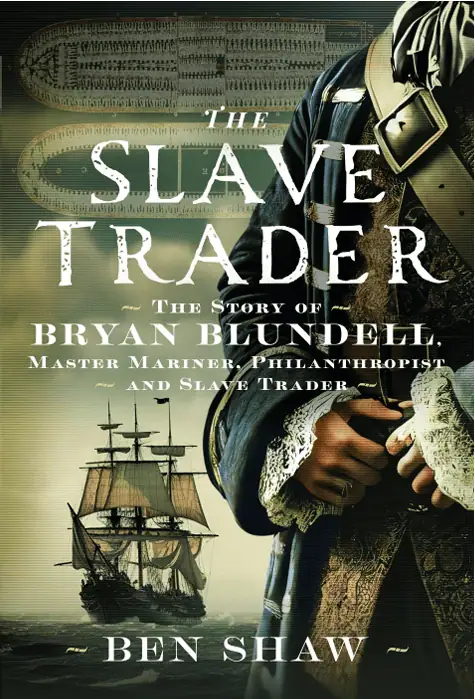
Writing the book has been one of the most rewarding experiences of my life, and it has shown me that it’s never too late to discover a new passion or take on an entirely unexpected challenge.
Pen & Sword Blog – The Story of Bryan Blundell – Pen & Sword Blog
Pen & Sword – Pen and Sword Books: The Slave Trader – Hardback
Finally, I’d love to hear from anyone who was at Loughborough Grammar during my time there, particularly members of the Class of 1995. If you remember me, or simply share an interest in history, family history or Liverpool’s past, I’d be delighted to hear from you.
If you happen to be in Liverpool on the evening of Wednesday 16 September, you would also be very welcome to join me at the Bluecoat Arts Centre in Liverpool at 6pm for the launch of the book. Appropriately, the event takes place in the building that began life as the original Blue Coat School, co-founded by Bryan Blundell in 1708. The event is free as part of Heritage Open Days, but places are limited to 50 and advance booking is recommended.