
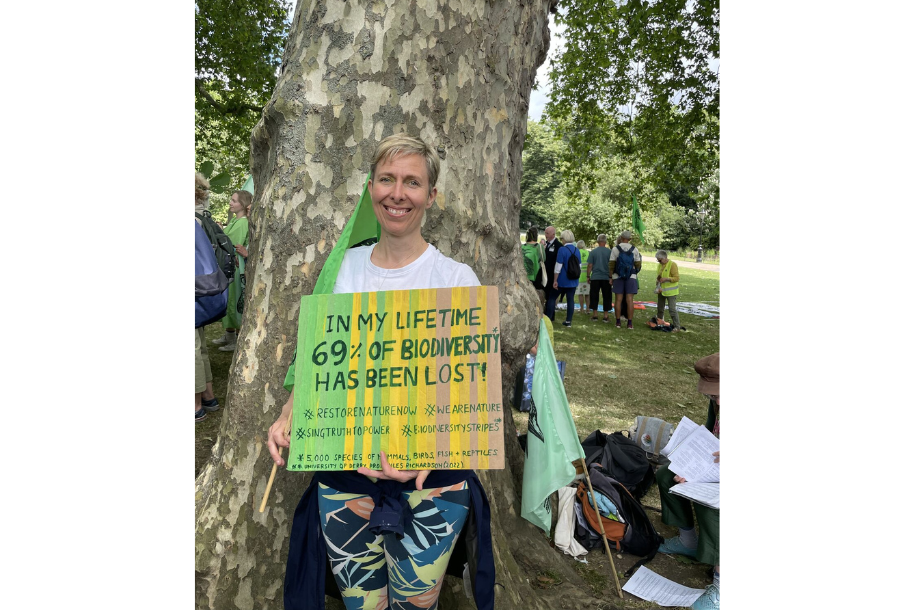
As the annual Conference of the Parties (COP30) has been taking place in Brazil, pupils have been taking part in lively debates surrounding climate change, reflecting the importance of young people being able to voice their opinions about wider global issues. This is a topic Laura Gelder-Robertson (LHS 1995) is passionate about. After returning to the University of Cambridge in 2020 to study the Climate Science and Sustainability Solutions, Laura became an Assessor at the Institute for Sustainable Leadership there, alongside running a business to educate and enact profound change and transformation tackling the climate emergency across business, government, society, communities, and schools.
Below are some engaging responses Laura gave us to questions around this.
Why is it important for young people to understand and talk about climate change?
The first thing to say is that you aren’t alone in trying to solve the climate crisis. There are many leaders across schools, communities, business, charities and government, who are taking responsibility and leading on how we respond and adapt to a changing climate. Young people are an important part of the puzzle, with unique skills and capabilities too.
I am conscious that there are lots of stories in the news and we can see the effects in the natural world around us of a changing climate and you will likely have an awareness of how the effects of climate change are being felt in communities around the world who are already experiencing first-hand impacts, which can impact on the way you feel and make you feel unsettled or anxious.
If you’re worried about the climate emergency, I’d recommend taking a look at ‘Force of Nature’, Clover Hogan’s incredible global initiative to channel eco anxiety into action and unite young people to actively shape the future they wish to see by providing the mindset, skills, and community to take action. Clover has spoken at many previous COPs and is a really powerful and positive youth leader to follow.
How can young people make a difference now to contribute meaningfully to the climate emergency?
My start point would be to ask yourself what you’re passionate about? If you’re into art, film-making, storytelling, music, debating, designing, sport, or something else, then there’s a role for you; climate action is about building a happier, healthier, more connected, enlightened and conscious society that lives in harmony with our planetary home, not by accident but by design. So, everyone has a role to play and there are thousands of great projects across the UK you can get involved with.
Secondly, if you want to dream big, check out the Earthshot Prize*. It’s an annual environmental award, founded by Prince William, to support and scale innovative solutions for the world’s greatest environmental challenges based on five goals, or “Earthshots.” Each Winner receives £1 million to scale their idea. Looking through this year’s list of winners gives you a sense of just how many initiatives there are already working towards tackling climate issues.
What can COP30 teach young people about the future of sustainability?
There was good news and bad news from this year’s Conference or Parties. Before I share some of the key takeaways, it’s worth saying that one thing to remember about COP30 is that you have not one, but 193 governments trying to agree on how they solve a whole multitude of complex problems together and that will always require trade-offs. There is no simple, elegant answer to the problems we face, but here are some of the steps forward I believe were made:
Nature restoration: One of the most significant outcomes is the setting up of the Tropical Forests Forever Fund (TFFF), a major financial initiative worth $125 billion aimed at protecting and expanding tropical forests and including funding for direct support to Indigenous peoples. A key theme was the need for climate action and nature restoration to work together, recognising they are inseparable and interdependent.
Business action and accountability: The Leaders Forum underlined that climate risk is increasingly being treated as an economic risk, accelerating business action and stressing the need for rising accountability and clearer mechanisms to track progress better.
Fossil fuels phase out: More than 80 countries at COP30 supported a call for a formal roadmap to fully phase out fossil fuels. However, the final negotiated agreement did not include this language due to opposition from oil-producing nations. One of the flaws of COP decision-making is that it requires everyone to agree rather than acting on a majority vote.
Youth leaders shaping the agenda: One of my highlights of COP30 was the Youth-led Climate Forum, where young leaders from around the world made a collective statement representing 30,000 young people across 100 countries to demand a “full, fast, fair fossil phase-out. Victoria Elizabeth Whalen spoke about young people’s frustration at being told what’s best for them by ‘institutions who have caused the climate crisis’. Brazilian Youth Leader, Marcele Oliveira spoke about how important it is that governments focus on adaptation (the process of adjusting to the current and future effects of climate change to minimize harm and capitalize on opportunities) and Bangladeshi Youth Leader, Sohanur Rahman, asked that young people be ‘at the heart of climate solutions, not sidelined in discussions about our future.’
My closing top tips would be:
- To get out into nature and connect as often as you can. Nature connectedness is one of the best resources we have for wellbeing and improving mental health, especially if we feel anxious about our changing world.
- Pick your passion. Check out what projects are happening on your doorstep that link solving real-world problems with activities you enjoy and get involved.
- Channel your emotions into being part of the solution. It always feels 100x better to take action, big or small, and feel part of building the brighter, healthier, fairer, more connected future we all dream of.